

Yorkshire people will tell you, with quiet pride, that they live in God’s Own County. They are not wrong. The dales are extraordinary. The moors are vast and melancholy in a way that seems designed for literature. The stone walls and the light and the particular quality of the silence — it is, genuinely, one of the most beautiful places in England — and, in certain corners, one of the most haunted. Haunted Yorkshire is not a theme park promise. These are real places, with real histories.
It is also, if you know where to look, deeply strange. Not in the way of theme park ghost tours and Viking re-enactments — though York has plenty of both. Strange in the older sense. The kind of strangeness that accumulates over centuries of human habitation, violence, faith, and the particular stubbornness that the landscape here seems to breed into people.
I live here. I know these roads. This is my haunted Yorkshire guide — an attempt to take you on a different kind of tour.
Stop 01
Skipton & the Castle Woods
SD 9881 5189 · North Yorkshire
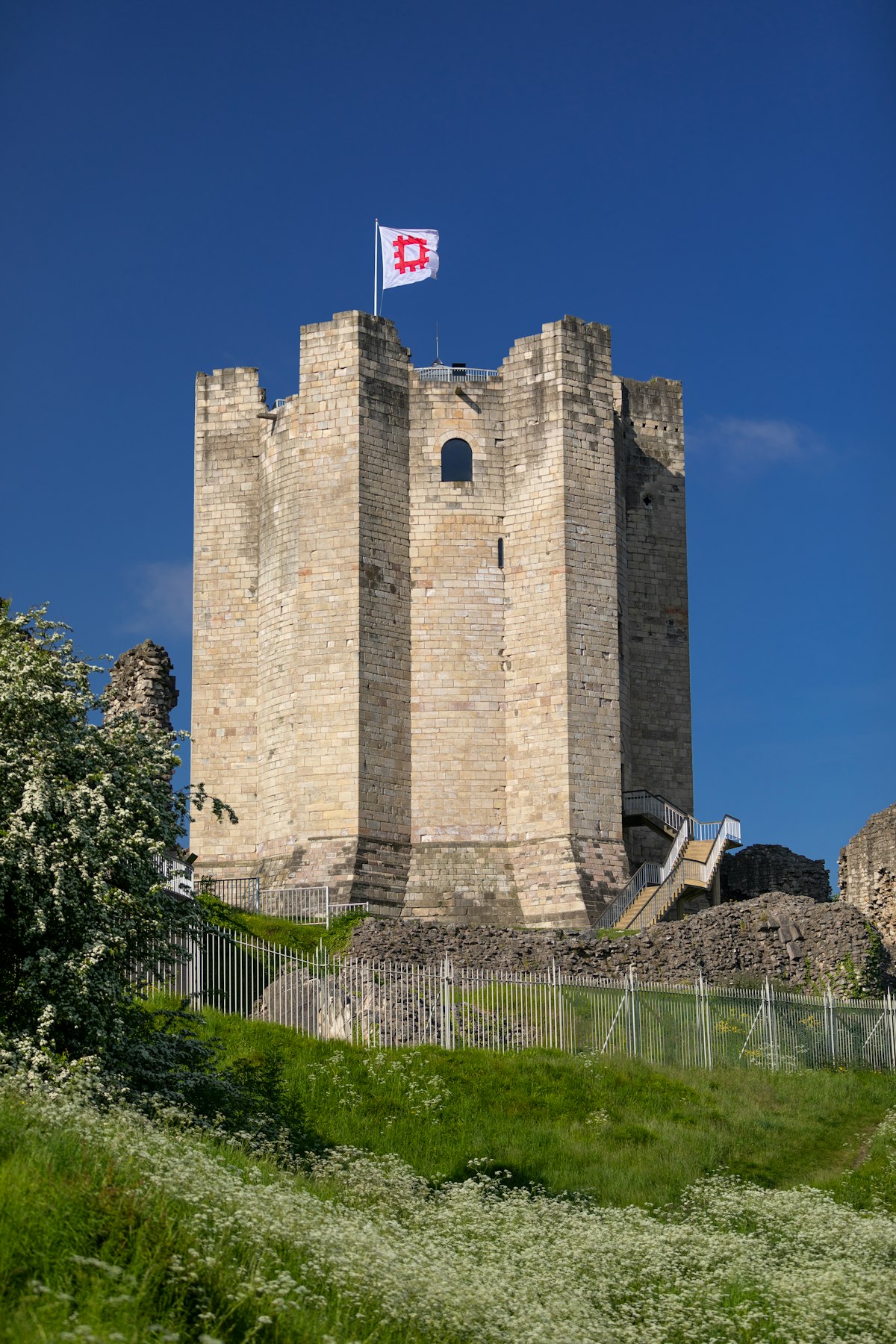
Start in Skipton, because Skipton is where the mood starts to change. The market town itself is cheerful enough — good pubs, a busy canal, a Tuesday market. But walk down into the castle woods and the temperature drops, and not just literally. The path runs alongside a stream beneath the castle walls, and the walls are very old — there has been a fortification on this site since the Norman conquest, and the current castle has been continuously occupied for over seven centuries.
The Clifford family, who held it for generations, were not gentle people. The last of them — Lady Anne Clifford — spent much of the seventeenth century restoring the castle and its estates after the devastation of the Civil War, and is remembered fondly enough. Her ancestors less so — which is what makes this corner of haunted Yorkshire worth a slow drive. The family motto is Desormais — henceforth. A word that presupposes something that came before.
There are no documented hauntings at Skipton Castle that I’m aware of. I am mentioning it anyway, because the woods below it at dusk have a quality that I have never quite been able to describe to anyone’s satisfaction, and I have tried a number of times.
Stop 02
Bolton Abbey & The Strid
SE 0752 5395 · Wharfedale
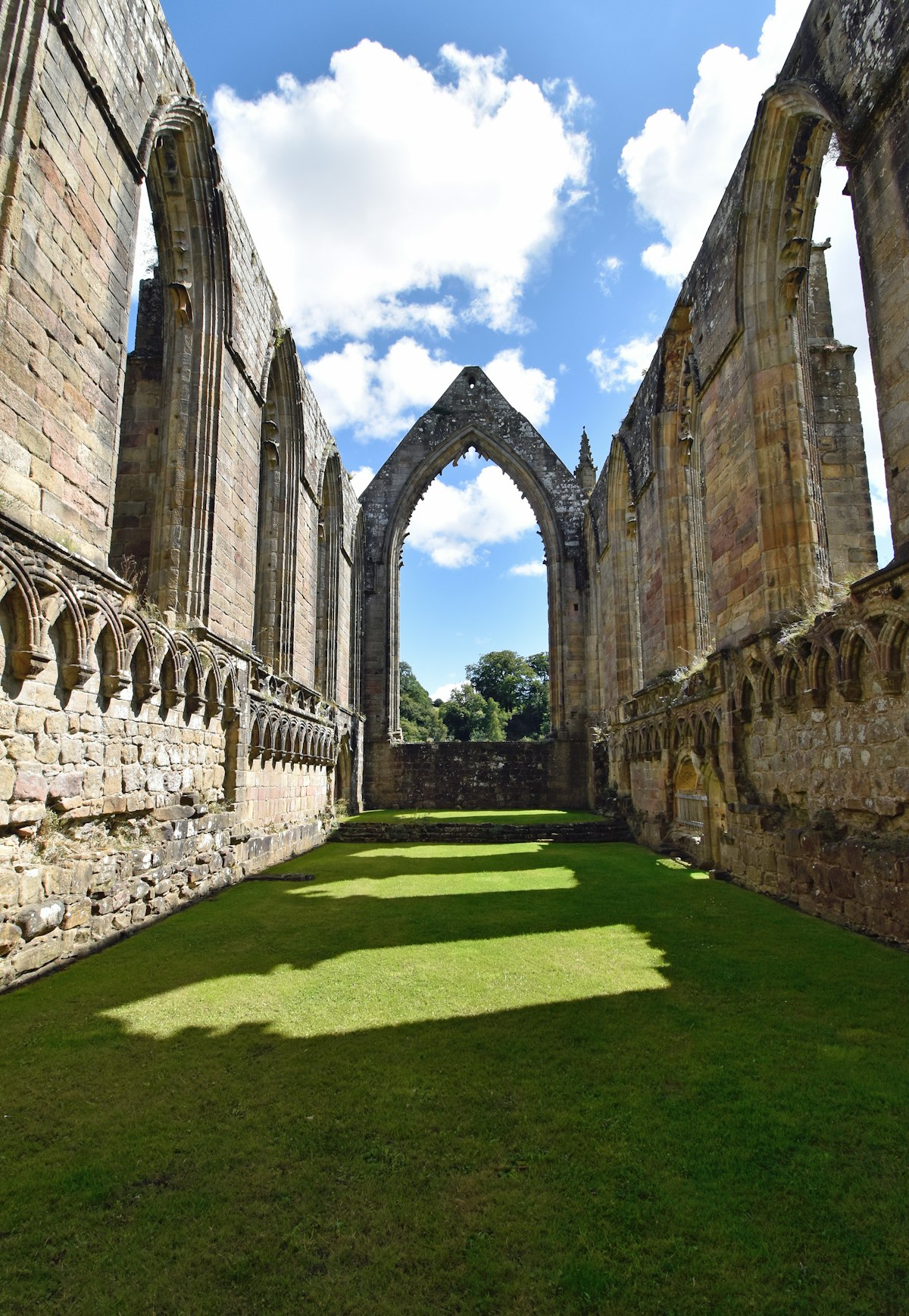
Thirty minutes south of Skipton, the ruined nave of Bolton Abbey stands in the Wharfe Valley with the cheerful accessibility of a National Trust property. You can park, buy a coffee, and walk to the ruins across a stepping-stone ford. Families do it on weekends. It is, in all the usual ways, a pleasant day out.
A mile upstream, the River Wharfe does something unusual. It narrows. Over centuries, the water has carved through the limestone bedrock until a river that runs broad and peaceful suddenly compresses to roughly two metres across — a gap so seemingly jumpable that generations of people have stood on one bank and eyed the other with what I can only describe as optimistic misjudgement.
The Bolton Strid looks like a challenge. It is not a challenge. What the narrow gap conceals is that beneath the surface the water has carved a series of caverns and tunnels through the rock, creating an underwater labyrinth with currents powerful enough to trap anything that enters. The surface looks calm. Two metres below it, the river is doing something entirely different.
Every person who has ever fallen into the Strid has died. This is not legend or local exaggeration — it is the documented historical record. The most famous victim was the young William de Meschines, whose death in the twelfth century prompted his grieving mother, Lady Aaliza de Rumilly, to found the priory that became Bolton Abbey, as an act of memorial. The beautiful ruin you’re looking at across the stepping stones exists because a boy tried to jump a gap in a river and did not make it.
A note: The Strid is a real place and the accounts above are accurate. Please do not approach the edge. Several people have died in living memory. The water is cold, the current beneath the surface is extreme, and the rock is slippery. The gap looks jumpable. It has always looked jumpable. That is the problem.
Stop 03
Heptonstall & the Ruined Church
SD 9880 2800 · Calderdale
The village of Heptonstall sits on a ridge above Hebden Bridge, in the steep-sided valley of the Calder. It is the kind of place that has been there long enough to have its own gravity. The streets are narrow and cobbled and the stone is dark millstone grit that turns almost black when it rains, which is often.
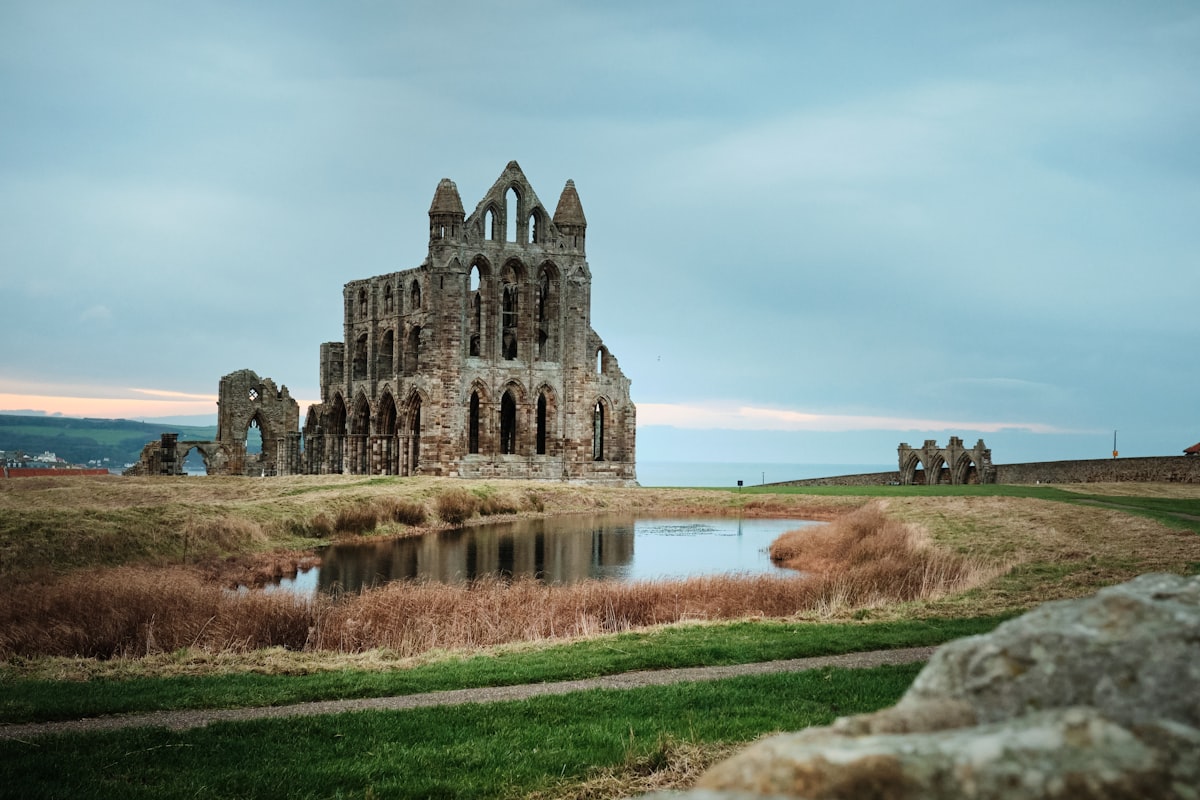
In the churchyard of one of the most visited spots in haunted Yorkshire, there are two churches — one intact and still in use, one a magnificent ruin open to the sky. The ruin is the old Church of St Thomas à Becket, destroyed by a violent storm in 1847 and simply left standing. The graveyard that surrounds both buildings has been in continuous use since the thirteenth century, and contains, if you know to look for it, the grave of Sylvia Plath.
Plath moved to a farmhouse near Heptonstall with Ted Hughes in the early sixties, and when she died in 1963 she was buried here, in this ancient churchyard, in this bleak and beautiful place that looks exactly like the interior of her later poems.
What I find most striking about Heptonstall is not the ruin or the grave but the atmosphere of the place — the way the fog comes in from the moors and turns everything soft and indistinct, the way the ruined church looks less like a destroyed building than like a building in the process of becoming something else. The roofless walls still stand. The Gothic windows still arch. The interior is open to weather and birds and the occasional tourist, and it holds its history with a kind of quiet insistence.
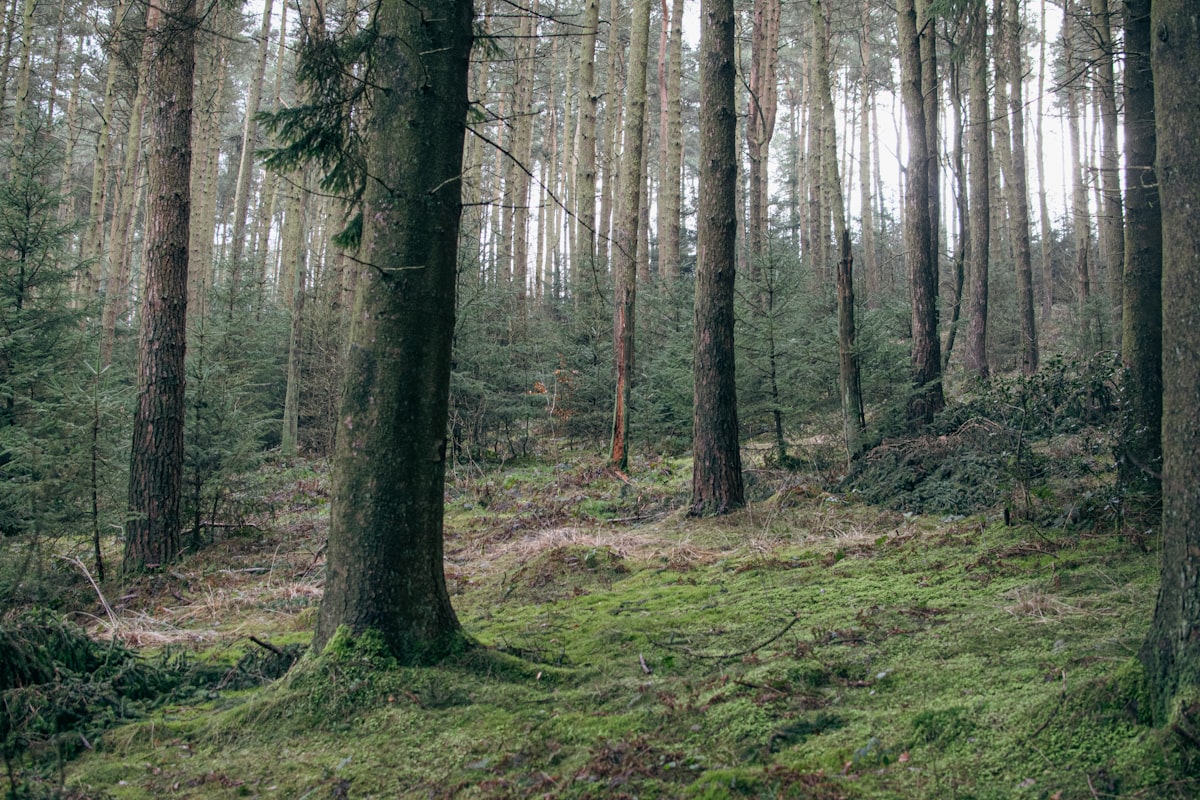
The walk up from Hebden Bridge through the woods below the ridge is worth doing, if the weather is reasonable. The path climbs steeply through old deciduous woodland, and on a misty morning the trees have a quality — bare-limbed, close together, the path ahead dissolving into white — that I find it difficult to spend extended time in without thinking about the kind of stories people used to tell about forests before stories became comfortable.
Stop 04
York: Haunted Yorkshire in Depth
Why Haunted Yorkshire Reaches its Peak in York
SE 6037 5174 · North Yorkshire
; ?>/uploads/York Minster.jpeg)
York is where the road trip ends, and it deserves its own essay rather than a final section. The city has been continuously inhabited since the Romans established a fortress here in 71 AD and named it Eboracum. It was a Viking capital. It was a medieval centre of power second only to London. It has been plague-stricken, besieged, bombed, and rebuilt so many times that walking its streets is less like visiting a historic city than like walking through a very compressed geological section of English history.
The Minster is the obvious place to start, but do not let its familiarity make you incurious. The building you see above ground is a medieval cathedral of extraordinary beauty. What is below ground is stranger: Roman columns still standing in their original positions, incorporated into the Minster’s crypt. The building is literally resting on the bones of two previous civilisations. There is a charge to go underground. Pay it.
; ?>/uploads/York Shambles.jpeg)
; ?>/uploads/Spooky Street.jpeg)
The Shambles is York’s most photographed street — a medieval lane where the upper storeys of buildings lean so far toward each other overhead that the sky is almost gone. It is now entirely gift shops and cafés, which is a shame in one sense and probably inevitable in another. Go at night, in November, in the rain, when the tourists have gone home and the cobblestones are wet and the light from the shop windows falls at medieval angles. It looks, at that hour, exactly like what it is: a street that has not fundamentally changed since the fourteenth century, occupied for the moment by people who will be gone in a blink.
York claims the title of most haunted city in England, a claim that other cities dispute but none particularly convincingly. The ghost tour industry here is substantial, and much of it is theatrical nonsense, and some of it is not. The Treasurer’s House — a National Trust property near the Minster — contains an account of a plumber who, while working in the cellar in 1953, encountered a column of Roman soldiers walking through the wall. The soldiers, he noted, appeared to be walking below the level of the current floor. This detail was later corroborated when archaeologists established that the original Roman road beneath the cellar was, in fact, at exactly the depth the plumber described.
I am aware that this is all explainable. Trick of light, suggestion, a tired man in a dark cellar. I am also aware that he correctly described the depth of a road he had no way of knowing about.
You can dismiss the ghost tours and the Viking attractions and the heritage-industry version of York’s strangeness. You can walk the city walls at dusk, above the Roman and medieval layers of settlement, and decide it is simply a beautiful old city and nothing more. You would not be wrong. I just think you would be missing something.
Yorkshire people will tell you it’s God’s Own County.
They are not wrong about that either.
If you enjoy haunted Yorkshire travel writing and stories that venture into stranger territory, you might also find interest in Seven Minutes on the Road from Chefchaouen to Fez — another piece about landscapes that unsettle. For more on the Roman history beneath York, English Heritage has documented the archaeological layers beneath the city.
[…] dark travel writing from S.B. Braithe: God’s Own Country Has a Dark Side explores haunted Yorkshire with the same restless spirit. For travellers curious about the real […]